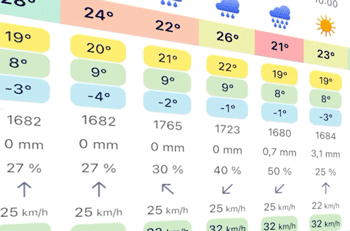
43°40'U / 111°55'B / Ketinggian 1478 m / 15:57 31/07/2026, America/Boise (UTC-6)


dari: 31/07/2026, 12:29
ke: 01/08/2026, 06:00
...GUSTY WINDS AND LOW HUMIDITY EXPECTED THIS WEEKEND... .A building ridge to the south combined with a trough moving across western Canada will tighten the pressure gradient over the area through the weekend creating breezy to windy conditions for the weekend. This combined with warming temperatures and low humidity will lead to high fire danger across much of eastern Idaho. The National Weather Service in Pocatello has issued a Red Flag Warning for gusty winds and low relative humidity, which is in effect from 2 PM Saturday to 9 PM MDT Sunday. The Fire Weather Watch is no longer in effect. * AFFECTED AREA...Fire Weather Zone 410 Upper Snake River Valley/Idaho Falls BLM, Fire Weather Zone 422 Sawtooth Range/Northern Sawtooth NF, Fire Weather Zone 425 Middle Snake River Valley/Twin Falls BLM north of the Snake River, Fire Weather Zone 475 East Salmon River Mountains/Salmon NF and Fire Weather Zone 476 Lemhi and Lost River Range/Challis NF. * WINDS...West 15 to 25 mph with gusts up to 45 mph during the afternoon and early evening hours both Saturday and Sunday. * RELATIVE HUMIDITY...As low as 7 percent. * IMPACTS...Wind and low humidity can lead to rapid spread of fire and more intense fire in receptive fuels.
 Jefferson,Upper Snake River Valley/Idaho Falls BLM
 A Red Flag Warning means that critical fire weather conditions
are either occurring now, or will shortly based on these criteria
for Southeastern Idaho:
- Relative humidity at or below 15 percent and wind gusts of at
least 25 mph in the mountains, or 30 mph in the Snake Plain.
- Thunderstorm coverage of 25 percent, without specific rainfall
criteria.
- Other high impact events deemed critical by the National
Weather Service and area fire management agencies.
A Red Flag Warning means that critical fire weather conditions
are either occurring now, or will shortly based on these criteria
for Southeastern Idaho:
- Relative humidity at or below 15 percent and wind gusts of at
least 25 mph in the mountains, or 30 mph in the Snake Plain.
- Thunderstorm coverage of 25 percent, without specific rainfall
criteria.
- Other high impact events deemed critical by the National
Weather Service and area fire management agencies. NWS Pocatello ID
 31/07/2026, 12:29

dari: 01/08/2026, 00:00
ke: 01/08/2026, 05:15
* WHAT...Temperatures up to 104 expected. Overnight lows will cool into the 60s and low 70s in the affected area, which is 10 to 15 degrees above normal for the time of year. * WHERE...Challis/Pahsimeroi Valleys, Lost River Valley, Wood River Foothills, Beaverhead - Lemhi Highlands, Teton Valley, Eastern Magic Valley, Shoshone/Lava Beds, Arco/Mud Lake Desert, Bear Lake Valley, Lower Snake River Plain, Raft River Region, and Upper Snake River Plain. * WHEN...From midnight tonight to midnight MDT Saturday Night. * IMPACTS...Hot temperatures may cause heat illnesses such as heat exhaustion and heatstroke. * ADDITIONAL DETAILS...Elevations below 5500 feet, the Teton Valley, and the Bear Lake basin are the areas most affected.
Upper Snake River Plain,JeffersonDrink plenty of fluids, stay in an air-conditioned room, stay out of
the sun, and check up on relatives and neighbors.
To reduce risk during outdoor work, the Occupational Safety and
Health Administration recommends scheduling frequent rest breaks in
shaded or air conditioned environments. Anyone overcome by heat
should be moved to a cool and shaded location. Heat stroke is an
emergency! Call 9 1 1.
If you do not have air conditioning in your home or lack shelter, you
can call 211 or visit 211-idaho.communityos.org for assistance
locating appropriate shelter from the heat.NWS Pocatello ID31/07/2026, 11:46